
Activist Anjali Damania used AI to analyse call data records of a self-styled godman, claiming potential links to political figures and unusual financial activity.

Police have filed a case against JJP leader Digvijay Singh Chautala and members of the INSO for allegedly damaging public property during an event at Kurukshetra University. The FIR cites damage to chairs and other property, leading to accusations of political disruption and government interference.

A BJP MLA in Madhya Pradesh is facing criticism after his son was accused of injuring five people in a car accident. The MLA allegedly made disparaging remarks against an IPS officer who took action in the case, further escalating the controversy.
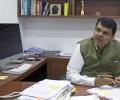
Activist Anjali Damania defends her use of AI to analyse call data records of arrested godman Ashok Kharat, amidst opposition scrutiny and allegations of illegal activity.

The TMC has refuted Prime Minister Modi's claim that high voter turnout in the first phase of the West Bengal Assembly polls indicates a mandate for change, asserting it reflects support for Mamata Banerjee and her government's development agenda.

A caste survey conducted in Telangana reveals that certain communities, such as Iyengers/Iyers, report the highest rates of inter-caste marriages, indicating a weakening of social barriers and increased social mobility.

Kerala recorded a high voter turnout in the Assembly elections, with over 77 per cent of eligible voters casting their ballots. The election is crucial as it will determine whether the LDF secures a rare third consecutive term, the UDF stages a comeback, or the NDA makes deeper inroads into Kerala's political landscape.

Voters in Kerala, Assam, and Puducherry are voting in crucial assembly elections.

A man has been arrested in Mandi district, Himachal Pradesh, for allegedly murdering a 19-year-old girl. The incident has sparked outrage, with authorities promising swift justice.

Delhi Police have arrested Asad Siddiqui, the main suspect in the double murder of an elderly man and his son in the Alaknanda area. The victims, Rakesh Sood and Karan Sood, were stabbed to death following a financial dispute. A third person, Rahul, was injured in the attack.

Three treasury employees in Hazaribag, Jharkhand, have been arrested for allegedly embezzling Rs 15.41 crore from government bank accounts over eight years, prompting criticism from the opposition BJP.

'Mobius made EMs investable and India his most enduring belief.'

'All this talk about women's reservation and Nari Shakti is a mirage.' 'It is a classic Trojan horse to bring about an alteration in the structure of political competition -- to the enduring advantage of the BJP.'

Police in Amravati district, Maharashtra, have filed a case against former state minister Omprakash alias Bachchu Kadu for allegedly conspiring to kill the brother of a BJP MLA.

A leading British law firm has challenged the fairness and legality of the trial and death sentence handed down to deposed Bangladeshi Prime Minister Sheikh Hasina, citing violations of international law and a politically hostile environment.

Both sides have now revealed a preference for escalation over strategic defeat, and each new provocation narrows the space for the next pause. The Touska seizure, Iran's refusal to negotiate under blockade, Israel's strikes on Iranian oil infrastructure -- all of these add up to an increasingly untenable situation. This makes the wild card -- Trump and his motormouth -- more consequential than ever, notes Prem Panicker in his must read blog on the Iran War.
The Hazaribag Superintendent of Police (SP) Office treasury scam has seen further developments with more arrests and a significant increase in the embezzlement amount to 28 crore. The investigation continues, with authorities pursuing leads in Bihar and freezing suspicious accounts.

A 34-year-old cloth trader was fatally shot by his tenant in Delhi's Preet Vihar following a dispute over parking. Police have arrested the accused and are investigating the involvement of his associates.

A TDP MP and former BRS MLA are among six people detained in Hyderabad after testing positive for drug consumption following a raid on a farmhouse party.

A major US study has assessed the reproducibility of research papers in the social sciences, revealing insights into the credibility of findings and highlighting challenges in replicating results.
A seven-year study analysing thousands of social science research papers reveals insights into the reproducibility and robustness of findings in the field.
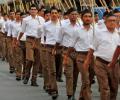
A US federal government commission has raised concerns about the state of religious freedom in India, recommending its designation as a 'Country of Particular Concern' and suggesting targeted sanctions.
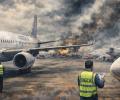
Events from mid-2025 to early 2026 exposed deeper systemic concerns for India's aviation safety architecture.

The core issues to be settled -- access to Hormuz, Israel's aggression in Lebanon, the question of Iran's nuclear programme, sanctions relief and compensation -- are thorny enough to require weeks of patient negotiation. The most likely outcome of the opening sessions is that both sides take the measure of each other, establish what is and is not negotiable, and return home without having broken anything. That would count as progress.

'Many have contributed in terms of gold and silver. Ladies in big numbers have contributed their home belongings and gold.' 'Some have donated their cars too.'

rediffGURU Nayagam PP, founder of EduJob360, offers guidance on how to pick the right college and course for your future.

This weekend, Donald Trump has begun to say the quiet part out loud -- that he wants to take control of Iran's oil, a formulation more in line with his robber-baron style of international relations.

Israel has for more than two decades and several US presidencies worked to draw the United States into a full-scale war with Iran. Having finally achieved that, the last thing it wants is Trump declaring victory and going home, as he is prone to do. Ali Larijani was the figure most capable of handing Trump a negotiated exit with something to show for it. Without Larijani, the road to an exit gets considerably narrower. Prem Panicker continues his must read daily blog on the Gulf War.

Rohit Pawar highlighted the atmosphere of suspicion, grief, and political intrigue currently surrounding these events in Maharashtra. He mentioned an investigation into the accident, citing a book that suggests killing a person's driver is an easy way to target them.

The ceasefire is still technically holding, to the extent that no overt hostilities have been reported yet, but the rhetoric has hardened dangerously. The week ahead will also clarify whether the Islamabad failure was a negotiating tactic or whether Washington has genuinely locked itself into a position from which the only exits are climb-down, escalation, or the slow bleed of a new status quo that nobody chose and nobody controls. Prem Panicker continues his must read blog on the Iran War.
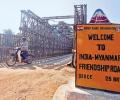
Security agencies in India are investigating a potential conspiracy involving arrested foreigners, including a US mercenary, who allegedly aimed to exploit Indian ethnic groups to undermine national security. The investigation involves data extraction from mobile phones and scrutiny of social media accounts to uncover the full extent of the plot and identify all involved parties.

Sensitive issues remain. Water sharing of the Ganga and Teesta rivers. Treatment of minorities, particularly Hindus. Border management. Trade imbalances. Connectivity projects.What happens next will shape not just bilateral ties, but the balance of South Asia itself, points out Ramesh Menon.

Israel and the United States had a plan. Iran punched back. And now the Gulf is reeling, the world is beginning to feel the pain and, as on date, no one in Washington or Tel Aviv appears willing to admit that the punch has landed, notes Prem Panicker, continuing his must-read blog on the war in the Middle East.

European nations say their findings show that his death was not a natural result of ill health but the consequence of deliberate poisoning.

The pause gives the US time to breathe, to regroup, to move its expeditionary force into position without risk of interception along the way. It gives Iran nothing -- on the ground, attacks against its infrastructure continue apace. Prem Panicker in his must read daily blog on the Gulf War.

The LPG squeeze on India's restaurant sector is the quotidian face of a deeper crisis.

The question is no longer whether the war will expand. It has. The next few days will tell us whether the war stabilises around Hormuz or whether the Strait itself becomes the trigger for a far larger rupture. What to watch for over the next 48 hours is simple: Any move by the US toward direct naval control of the Strait; any credible Iranian attempt to disrupt or mine shipping lanes and, critically, whether energy infrastructure in the Gulf continues to be targeted.If those lines are crossed in tandem, the war will no longer be containable within the region.

Taking Kharg would give the US control over virtually all of Iran's oil exports and thus provide significant leverage, notes Prem Panicker in his must read daily blog on the Gulf War. It would also put American troops within range of Iran's remaining missiles, drones, and artillery on a piece of real estate that is just eight square miles in size, and just 15 miles from the Iranian mainland.

In the present hyper-connected world, there are many domestic and global factors that affect financial markets. Of them, the most powerful and often least predictable are geopolitical events, which often boil down to one diplomatic headline.

The 'rescue' operation occurred within kilometres of Iran's underground tunnel complex at Isfahan, assessed by the IAEA and US intelligence as holding a substantial portion of the country's 60 per cent enriched uranium stockpile. Retired senior US military officers have highlighted that the mission's footprint -- hundreds of special operators, multiple heavy-lift aircraft deep inside Iran -- appears outsized for recovering a single airman. Prem Panicker continues his must read blog on the Iran War.
